There’s a window in early socialization of doodle puppies that closes faster than most people realize. What happens inside that window — or doesn’t happen — shapes who that dog becomes for the next decade or more. I’ve raised Bernedoodles, Goldendoodles, and Irish Doodles long enough to know that good genetics matter, but socialization is what turns a well-bred puppy into a well-adjusted dog.
The importance of socialization is what I genuinely believe every puppy buyer should understand before they bring a dog home.
What Early Socialization Actually Is
Socialization is the process of exposing a young puppy to the world in a way that teaches it that the world is safe. That means people, sounds, textures, handling, environments, and routines — all introduced gradually and positively during the period when the puppy’s brain is most open to learning.
That critical window runs roughly from 3 to 14 weeks of age. During this time, a puppy’s brain is wiring itself at a pace it will never match again. New experiences encountered here tend to get filed under “normal.” The same experiences encountered after this window closes are more likely to register as threatening or stressful.
This isn’t theory. It’s rooted in decades of canine behavioral research, including foundational work done through the Guide Dogs for the Blind program and studies by researchers like Scott and Fuller in the 1960s, which first identified sensitive developmental periods in dogs.
Why the Stakes Are High
Getting socialization wrong — or skipping it — has real consequences. Not exaggerated ones. Real ones that show up in vet offices, training programs, and, unfortunately, in rescue shelters.
Fear and Anxiety
A puppy that doesn’t experience a variety of people, sounds, and environments during the sensitive period often develops generalized anxiety. This can look like a dog that freezes on walks, hides from visitors, or shuts down in new places. It’s not a personality quirk. It’s a gap in early experience.
Reactivity
Reactivity — when a dog barks, lunges, or overreacts to other dogs, people, or stimuli — often (but not always) has roots in poor early socialization. The dog isn’t being aggressive for the fun of it. It’s reacting from a place of fear or overstimulation because it never learned to process novel things calmly.
Handling Problems
Dogs that weren’t touched, restrained, or gently manipulated as puppies often become difficult or even dangerous to handle at the vet, groomer, or in basic daily care. Nail trims become battles. Ear checks become stress events. This makes life harder for the dog and for everyone who cares for it.
Trouble Adjusting to Normal Life
Elevators, hardwood floors, cars, dishwashers, children, men in hats, people with different voices or appearances — a poorly socialized dog can find any of these things alarming. That dog isn’t living a full life. It’s managing a constant stream of stress.
What Good Socialization Looks Like in Practice
Good socialization isn’t about flooding a puppy with stimulation or checking boxes on a list. It’s about deliberate, positive exposure that builds genuine confidence over time. Here’s what that actually involves.
Starting From Day One
At Morning Glory, we don’t wait until puppies are eating solid food to start interacting with them. We handle them from birth. We pick them up, speak to them, and touch them gently in those first days when their eyes and ears haven’t even opened yet. Early tactile stimulation has been shown to support neurological development and improve resilience to stress later in life. The U.S. Military’s “Bio Sensor” program, also known as the Super Dog Program, identified specific early neurological stimulation exercises — including holding puppies in different positions and stimulating their feet — that produced measurably calmer, more adaptable dogs.
Paw Handling and Body Acceptance
We touch paws. Every day. We help puppies become comfortable with the kind of contact they’ll experience during grooming and vet visits for the rest of their lives. We also gently roll puppies onto their backs, which teaches them to accept being in a vulnerable position without panic. This kind of early handling makes the difference between a dog that tolerates being examined and one that requires sedation.
Sound and Texture Exposure
Puppies need to hear normal household noise — vacuums, blow dryers, pots clanging, music, televisions, outdoor traffic, and yes, the occasional loud, unexpected sound. We run through all of it. We also put puppies on different surfaces: grass, concrete, soft mats, gravel, and slick floors. Each new texture is a small lesson that the world comes in different forms, and that’s okay.
Bath time and blow-drying are part of the routine, too. For Doodles — who will need regular grooming their entire lives — learning early that water and warm air are not threats is genuinely important.
Daily Play, Inside and Outside
We play with puppies every single day, both indoors and outdoors. We introduce toys with different shapes, textures, and sizes, and let puppies explore at their own pace. Outdoor play exposes them to wind, uneven ground, distant sounds, and environmental unpredictability. Indoor play builds comfort with household life. Neither replaces the other.
Exposure to a Range of People
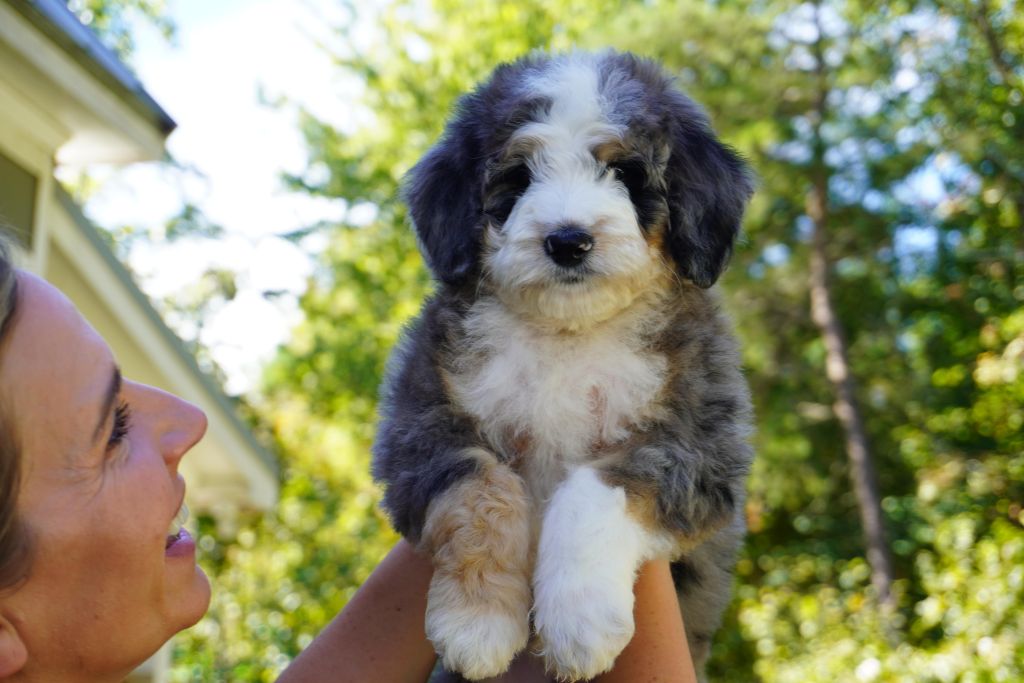
This one matters more than people realize. Puppies need to meet men and women because men and women move, sound, and look different. They need to meet people of different nationalities and backgrounds — different skin tones, different clothing styles, different accents. A puppy that only ever sees one type of person during that sensitive window can develop fear toward unfamiliar humans later on.
We make a point to introduce our puppies to a variety of people before they go home. Not strangers off the street, but trusted people in our circle who represent different appearances and voices. It’s a small thing that makes a meaningful difference.
What You Can Do After You Bring Your Puppy Home
Socialization doesn’t end when the puppy leaves us. The window extends to about 14 to 16 weeks, and what you do in those first weeks at home matters enormously. Here’s what I’d encourage every new owner to do:
- Keep it positive. Let the puppy approach new things on its own terms. Never force interaction.
- Go lots of places. Carry your puppy to places it can’t walk yet because of vaccination schedules — parking lots, hardware stores, and outdoor markets.
- Introduce handling at home. Touch ears, look in the mouth, and handle feet regularly. Start using a brush and brush them frequently.
- Invite different people over. Men, women, children, people wearing hats or glasses, people with beards.
- Let your puppy hear the world. Don’t tiptoe around noise. Let the vacuum run. Turn on the blender.
- Pair new things with good things. Treats, calm praise, and play make new experiences positive.
One thing to watch: bad experiences during this window can stick. If your puppy is terrified by something, don’t push through it. Back off, let the puppy settle, and reintroduce the stimulus at a much lower intensity later.
A Note on What Breeders Can and Can’t Do
As breeders, we give puppies an excellent foundation. We can expose them to more things in their first eight weeks than many dogs experience in months. But we can’t finish the job. The puppy leaves us. What happens next is up to you.
It’s the reality of how development works. The work we do here sets the stage. Your consistency in those next few weeks determines whether that foundation holds.
Puppy Socialization Conclusion
Early socialization is one of the most important things that happens to a puppy before it ever reaches your home. When it’s done well, it produces a dog that can handle life — a dog that walks calmly past strangers, tolerates grooming, adjusts to new environments, and lives without constant anxiety. When it’s done poorly or skipped, the consequences are real and often lasting.
At Morning Glory, early socialization is part of every single litter we raise — not because it sounds good on a website, but because we’ve seen what the alternative looks like and we’re not willing to send a puppy into the world without that foundation.
If you’re shopping for a puppy anywhere, ask your breeder specifically what socialization looks like during the first eight weeks. The answer tells you a lot.
Check out more Doodle insights in our blog library.
As always feel free to explore our website at morningglorydoodles.com to see more blog posts, pictures of cute puppies, current litters looking for their forever homes and upcoming litters!