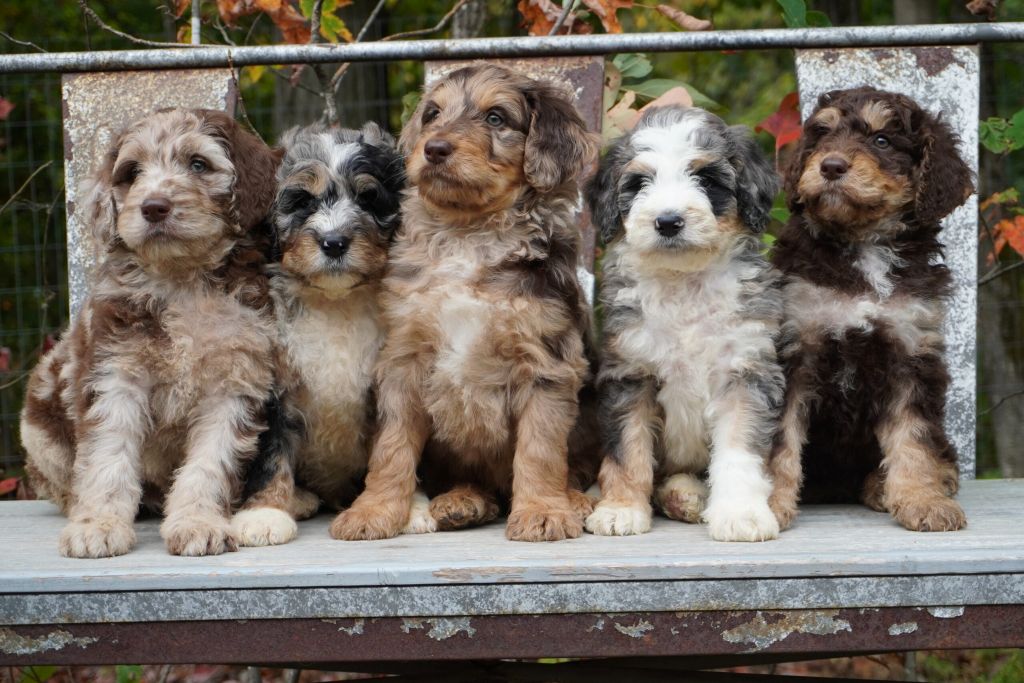
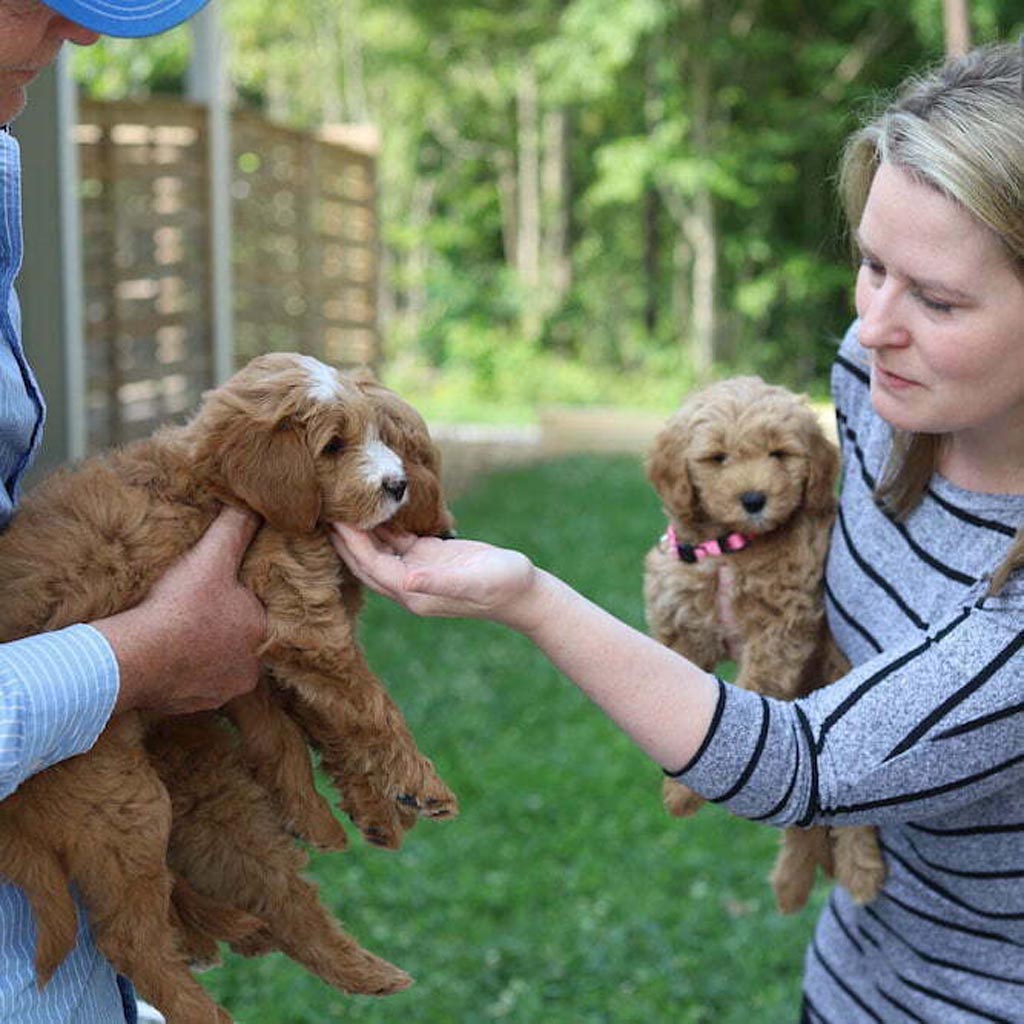
You just got your first Goldendoodle puppy and it’s all so exciting… but now what? Now starts an incredible journey with your new furry companion, and that includes crate training! This blog post will focus on the need-to-know parts of crate training that will help you and your Goldendoodle through this process!
Why Crate Train?
Those first few nights with your new Goldendoodle (Irishdoodle/Bernedoodle) puppy can be exciting, and sometimes difficult. When your puppy goes home with you, everything is new to them. The environment, people, other pets if you have any, etc. It can be overwhelming and stressful for your puppy, and that is why crate training is so important. Crate training will not only help you in the long run, but will also provide a space for your Goldendoodle where they can go when things become too overwhelming for them, like a house party or holiday get together with the entire family. Ideally, your Goldendoodle will learn to love their crate, and we will tell you how to achieve this!
What Kind Of Crate Should I Get?
We highly recommend a wire crate with a divider. This allows you to get a crate that is large enough for your puppy when they are fully grown, but you can section off a small area when they first come home. At 8 weeks, a puppy should only have enough room to comfortably stand and turn around. If they have too much room, they may go in the corner to go potty and then be able to get away from it! Instinctively, puppies do not want to use the bathroom in the area where they sleep! You may want to put comfy beds and blankets in the crate with them; but we would recommend waiting as there is still a potential for accidents when just starting out. We suggest using a towel or thin blanket that you wouldn’t mind getting dirty and is easily washed until your puppy has become accustomed to the crate.
When To Start Crate Training?
You can start crate training your goldendoodle (Irishdoodle or Bernedoodle) as soon as you arrive home with them. Start by making the crate cozy for them. You can do this by putting their toys in it, along with a thin towel or blanket, and some treats. First, leave the door to the crate open, put your puppy on the floor next to the crate to let them investigate it. Let them go in and out of it on their own. This will help them familiarize themselves with it before it is time to stay in it through the night.
The First Night
Your puppy may whine and cry during the first few nights of crate training, don’t worry this is normal! Some puppies crate train easily, while others take a little more time. Your puppy will do best if they can see you! We recommend putting the crate in your bedroom beside your bed, so that your puppy knows they are not alone. Remember, your puppy is used to sleeping in a puppy pile every night, so this will be quite the change for them! You also want to be able to hear your puppy if they whine or bark during the night to go potty, If your puppy is crying a lot, don’t be discouraged. A helpful trick that has worked for us is placing a thin blanket over three sides of the crate, creating a “den” like environment for them. We also recommend playing soft piano music or using a noise machine with white/brown noise. Spotify even has “puppy calming” playlists! This can really help your puppy to calm and get to sleep. The goal is for your puppy to like their crate, so it’s important that you make this experience as positive as possible. When they’re being quiet and well-behaved in their crate, praise them and give them treats. This teaches them that not only is good behavior rewarded, but that the crate isn’t so bad!
How Long Can They Stay In The Crate?
Your puppy shouldn’t stay in a crate any longer than one hour at a time during the day when they first come home at 8-10 weeks. Any longer at this age is extremely unhealthy for your puppy both physically and emotionally. Trying to hold their bladder for longer than that can lead to urinary tract infections. Lack of interaction with people and being isolated for longer can lead to stress, separation anxiety and behavior problems. The amount of time they can be left will increase as they get older, but they should never be left in a crate for hours every day. At 10-12 weeks, 2 hours is the maximum, and then at 3 months about 3 hours and so forth. Please realize that leaving your puppy or adult dog alone in a crate every day for hours deprives them of the human interaction, training and exercise that they need. They can stay longer at night, if they are sleeping through the night. Sometimes, they may need to go potty during the night. If they do, they will wake you up by whining or crying. You shouldn’t need to wake them up during the night to potty. If they are sleeping, you can let them sleep.
When Should They Go In The Crate?
Aside from staying in the crate through the night, is there any other time they should go in the crate? Yes, crate training can be an incredibly useful tool for potty training. An example of using the crate for potty training is putting them directly into their crate as soon as they are done with a meal. They should then stay in the crate for 15-20 minutes. This is as long as it takes for food and water to digest for them while they are under 6 months old. Once they are ready to go to the bathroom, let them out, but do not let them walk to the door. Carrying them from their crate to directly outside will ensure that they don’t try to use the bathroom inside while on the way outside. Once they have used the bathroom and you are convinced they are empty, then they can be loose for playtime (with supervision!).
The crate is also useful for moments like quick errands to the grocery store, or picking the kids up from school. Small amounts of time in the crate will be perfectly fine for your puppy, and will give you the chance to get out of the house to get that list of things done that have been put off since getting your puppy! The crate will give you peace of mind that your puppy isn’t getting into things while you’re gone, or having an accident on that nice rug in the dining room.
CRATE TRAINING CAN BE HELPFUL!
Crate training is an essential part of the training process, and you’ll be glad you stuck it out once your Goldendoodle (Irishdoodle or Bernedoodle) is older! Your Goldendoodle, although probably not a fan at the start, will be appreciative of the crate when they’re older and have a space just for themselves. If you’re having issues crate training your Goldendoodle (Irishdoodle or Bernedoodle) puppy, don’t hesitate to reach out and let us know, we’d love to help you!


As always feel free to explore our website at morningglorydoodles.com to see more blog posts, pictures of cute puppies, current litters looking for their forever homes and upcoming litters!